

How Businesses Are Helping Transform Field and Feral into a Thriving Ecosystem


At Field and Feral, something special is taking shape. What might look like a farm and nature recovery project on the surface is becoming a great example of what can happen when businesses combine their skills, resources and engineering expertise for a shared purpose.
The aim is bigger than simply growing produce. The site is being transformed into a diverse ecosystem that supports biodiversity, sustainable food production and the local community, with produce grown on the farm helping to support local foodbanks.
Behind much of that progress is technology that visitors may never even see.
Off-Grid Irrigation: Sustainability Beneath the Surface

Some of the most important sustainability projects are the ones hidden underground.
With the recent very dry weather, keeping the orchard, gooseberries and future growing areas properly watered has become increasingly important. Doing that efficiently on an entirely off-grid site presented a significant engineering challenge.
This is where SMS Tech has been able to lend its expertise.
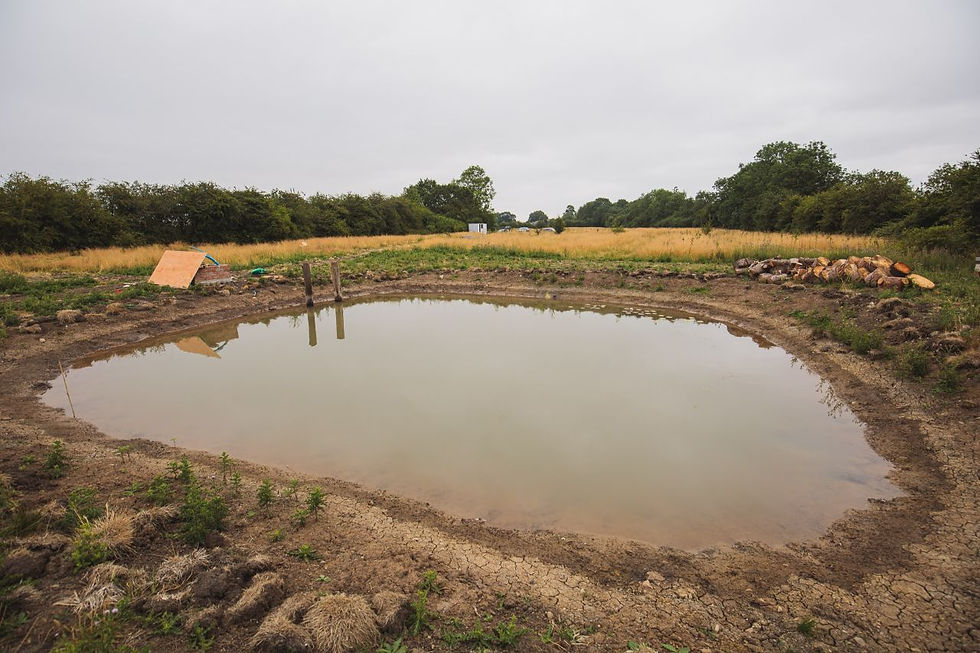
Water is drawn from the lake developed by Dechra and distributed automatically around different areas of the site through underground pipework installed by Story Contracting Limited.
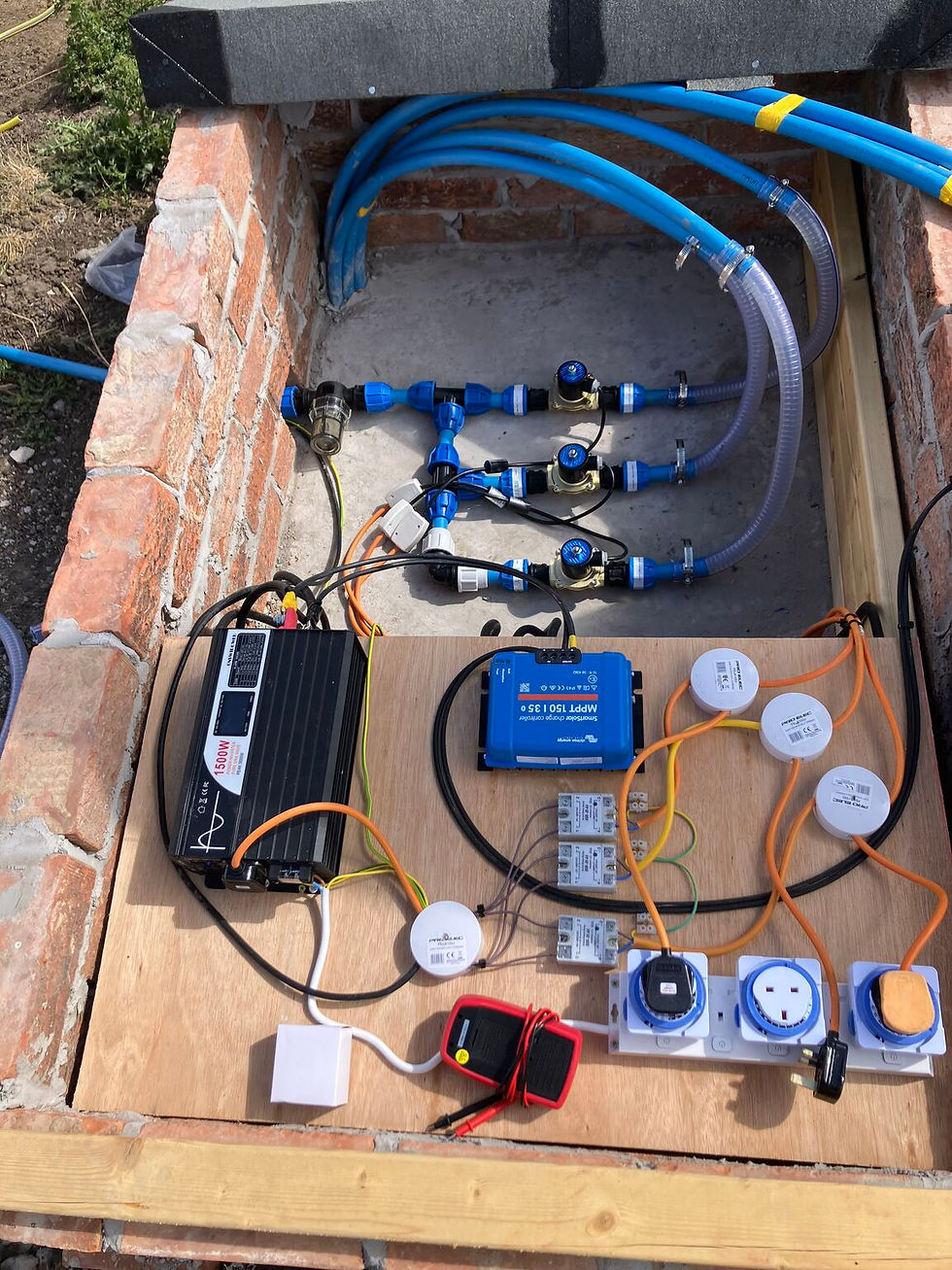
Rather than relying on someone manually moving hoses or operating pumps, the irrigation network has been designed to take care of much of the work automatically.
As each irrigation timer activates, a valve opens while simultaneously switching a relay that powers the pump. Water is then sent precisely to the area that needs it.
It is a relatively simple experience for the end user, but making it work reliably required a carefully engineered solution.
Engineering an Irrigation System Without Mains Water

Most conventional irrigation systems are designed around a readily available mains water supply and consistent water pressure.
Field and Feral doesn't have that luxury.
The site is completely off grid, meaning the team needed to approach the problem differently.
SMS Tech helped develop a bespoke pumping and control solution capable of operating using solar-generated electricity, allowing water from the lake to become a practical irrigation source without depending on mains utilities.
This means the orchard and growing areas can receive the water they need while keeping energy consumption and environmental impact to a minimum.
Drip Irrigation Helps Make Every Drop Count
Another important part of the project came from Inspired Entertainment, Inc., which installed the drip irrigation system.
Rather than applying large quantities of water during the hottest part of the day, the system delivers water gradually overnight.
This gives moisture more opportunity to penetrate the soil and reach the plants' root systems instead of being lost unnecessarily through daytime evaporation.
It also means far less time needs to be spent manually watering different areas of the site, giving Farmer Stig more time to concentrate on the many other jobs involved in developing and maintaining Field and Feral.
Installing these systems can be challenging, particularly across a developing off-grid site, but once operational they can provide significant long-term benefits.
Reclaimed Materials Powering a Sustainable Solution
The pump station itself perfectly reflects the wider ethos behind Field and Feral.
Where possible, existing materials have been given another life rather than new materials simply being purchased.
The bricks used to construct the pump station were recovered from a skip.
The supports holding the solar panels were repurposed from a dismantled tennis court.
The electrical system uses reclaimed batteries, while approximately 800 watts of solar panels provide renewable energy to help power the system.
It demonstrates that sustainable engineering doesn't necessarily require everything to be new.
Sometimes the better solution is to look at the materials, equipment and resources already available and find an intelligent way of putting them back to work.
Field and Feral: Creating More Than a Productive Farm
Importantly, this isn't simply about irrigation or growing food.
The project is helping create a functioning ecosystem.
The lake that provides water for the irrigation system is already beginning to establish itself as a habitat, with the first water lilies appearing on the surface.
As the site continues to develop, the combination of water, planting, orchard areas and managed habitats has the potential to provide greater opportunities for wildlife while simultaneously supporting food production.
That combination is at the heart of what makes Field and Feral interesting.
Nature recovery and productive land don't necessarily have to compete with one another. With thoughtful planning, engineering and collaboration, they can work together.
Businesses Working Together for Community Benefit
Perhaps the strongest part of the Field and Feral story is the collaboration behind it.
Different organisations have contributed different areas of expertise:
SMS Tech: has supported the off-grid pumping, controls and automation.
Dechra: developed the lake that now provides the site's water source.
Story Contracting Limited: installed the pipework needed to distribute that water.
Inspired Entertainment, Inc: installed the drip irrigation system.
Reclaimed materials, renewable energy and practical engineering have been combined throughout the project.
Each contribution forms another part of a much larger system.
The result is an evolving farm and ecosystem capable of supporting wildlife, producing food and ultimately providing more produce for local foodbanks and people within the surrounding community.
Smart Engineering Doesn't Always Need to Shout
For SMS Tech, Field and Feral is a great example of what engineering can achieve when technology is applied to solve a genuine problem.
There doesn't need to be a huge control panel, complicated interface or highly visible piece of machinery for technology to make a difference.
Much of this system sits quietly underground.
Timers switch. Valves open. Relays activate. Solar energy powers the pump. Water travels through the pipework and reaches the plants that need it.
And while all of that happens in the background, trees grow, crops develop, habitats establish and more of the farm becomes productive.
Sometimes the most impressive technology is the technology that simply gets on with the job.